
Fujian Tulou Guide
Red-Brick Houses of Southern Fujian: Walls That Hold Memory
Explore the textures, courtyards and family history behind the red-brick houses that give southern Fujian villages and old streets their…
Read Article 콘텐츠로 건너뛰기
Learn how to visit Fujian Tulou from Xiamen, choose the right village area, travel respectfully, and understand these remarkable communal homes.
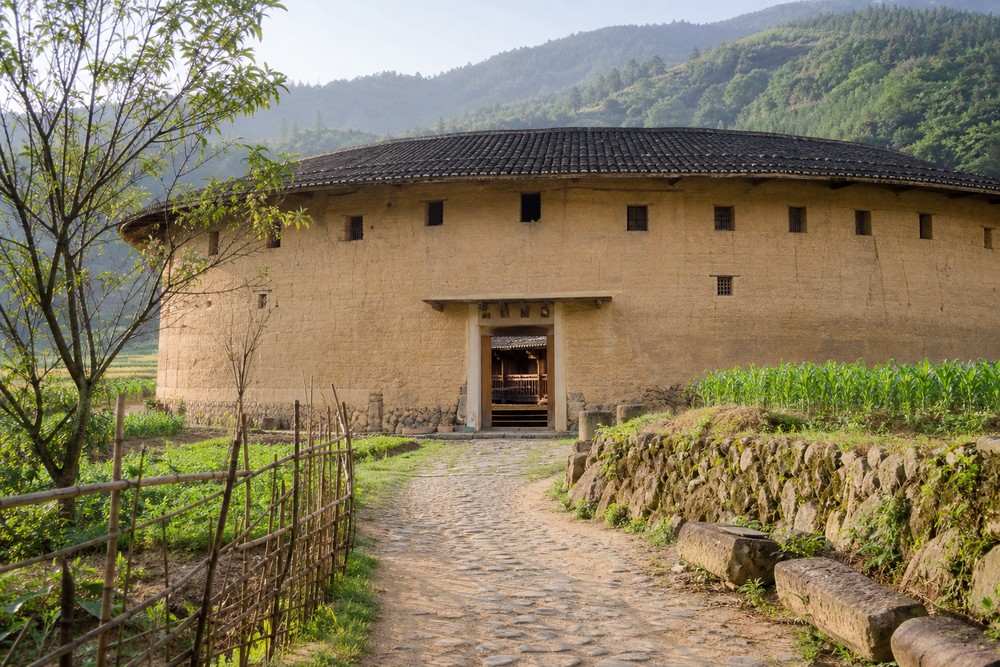
Fujian Tulou are among southern China’s most distinctive cultural landscapes. The large rammed-earth buildings were created as communal homes, often for extended families, and appear in circular, square, and other forms. Their value is not limited to unusual architecture. Tulou belong to living villages shaped by farming, kinship, migration, and adaptation. A thoughtful visit should make time for both the buildings and the communities around them.
The structures demonstrate sophisticated use of local earth, timber, stone, ventilation, and defensive design. Shared wells, kitchens, storage areas, ancestral spaces, and upper-floor rooms reveal how daily life was organized. UNESCO recognition covers selected clusters rather than every earthen building in Fujian. A guide who understands local history can explain differences without reducing the region to a single famous circle.
Several Tulou areas can be reached from Xiamen, and each has a different balance of scenery, accessibility, and visitor numbers. Some clusters are convenient for a first visit, while more distant villages reward travelers who have an extra day. Do not assume that adding many sites creates a better experience. Two well-chosen clusters plus a village walk can be more meaningful than hours spent moving between parking areas.
A private vehicle is the simplest option for a focused day trip because travel times are long and rural connections vary. Organized tours reduce logistics but may follow a fixed pace. Public transport is possible for experienced travelers, although transfers and last-mile travel require planning. Start early, confirm the exact entrance area, and avoid scheduling an evening train or flight immediately after the return.
Some Tulou remain homes, not open-air museums. Respect private areas, lower your voice, and ask before photographing residents. Purchase tea, food, or crafts only when you genuinely want them, and avoid blocking doorways for photographs. Drones may be restricted and can disturb residents. A responsible visit treats people as hosts and neighbors rather than scenery.
Weather changes quickly in the hills. Carry rain protection, water, sun protection, and shoes suited to stone lanes and steps. Mobile coverage may vary. Simple local restaurants often serve family-style dishes, so dietary needs should be explained in advance. Overnight stays can offer quieter mornings and evenings, but accommodation standards differ from city hotels. Confirm heating, private bathrooms, and luggage access before booking.
A strong itinerary gives this subject enough time to feel connected rather than isolated. Start by deciding how what makes tulou important, choose the right area for your trip, and how to travel from xiamen relate to the places before and after them. Keep arrival and departure days light, especially when a flight, ferry, rural drive, or large railway station is involved. Use one well-located base where possible and group nearby visits on the same day. This reduces repetitive transfers and leaves more energy for conversations, meals, and unplanned discoveries. If your schedule is short, remove a stop rather than shortening every stop. The best travel memories often come from an extra hour in one neighborhood or village, not from reaching the highest possible number of attractions.
The first mistake is relying on an itinerary copied from a stranger whose season, pace, budget, and interests may be completely different. The second is treating travel time shown on a map as the full door-to-door journey. Security checks, station walks, traffic, weather, and ticket collection can add meaningful time. Another mistake is postponing essential preparation until arrival. Complete the practical items in this guide early, including select one or two clusters instead of rushing and start early from xiamen. Finally, avoid making claims or bookings based only on promotional language. Check what is actually included, whether a site remains open, and whether an experience is appropriate for residents as well as visitors. Clear expectations create a calmer trip and make it easier to respond when conditions change.
Information tells you where a place is, but local knowledge explains why it matters and how to experience it at the right pace. A good local host can translate more than words. They can interpret etiquette, introduce regional food, identify the most practical route, and explain when a famous stop is less rewarding than a quieter alternative. This is particularly useful for first-time international visitors who want cultural depth without losing time to avoidable logistics. Local support should still leave room for personal choice. Ask questions, share your interests, and be honest about mobility, food, comfort, and photography priorities. The result should feel like your journey through China, supported by people who understand the destination, rather than a fixed performance delivered to every traveler in exactly the same way.
Review the route once from the perspective of an ordinary travel day. Check how early you must wake, how long you will sit in a vehicle, where meals fit, and whether there is time to use a restroom, rest, or change plans. Confirm names and addresses in Chinese, save bookings offline, and share the schedule with someone you trust. Recheck weather and official access information shortly before travel. If the plan includes a guide or operator, request a written itinerary with contact details and clear inclusions. These small steps are not glamorous, but they protect the time and attention you want to give to the destination itself.
Good travel planning balances reliable logistics with room for discovery. Confirm opening hours, transport, weather, and current regulations through authoritative sources shortly before each travel day. Avoid building a schedule that depends on every connection being perfect. A knowledgeable local specialist can be useful when language, rural transport, heritage interpretation, or dietary needs are important. The goal is not to remove every surprise, but to make sure the surprises are enjoyable rather than stressful.
Yes, a focused day trip is possible, but it involves several hours of driving. An overnight stay offers a slower experience.
No. Tulou include circular, square, rectangular, and other forms, and their layouts vary by place and period.
Use this guide as a starting point, then adapt it to your pace, interests, season, and comfort level. China rewards travelers who prepare carefully and remain curious once they arrive. Eastorya Travel focuses on authentic local experiences in Xiamen and Fujian, with practical support and space for genuine cultural discovery. If you would like help shaping a private itinerary, contact our local team with your preferred dates and travel priorities.
Continue Reading
Explore the textures, courtyards and family history behind the red-brick houses that give southern Fujian villages and old streets their…
Read Article
Look beyond the famous circular walls to understand how courtyards, galleries and shared spaces continue to shape life in Fujian…
Read Article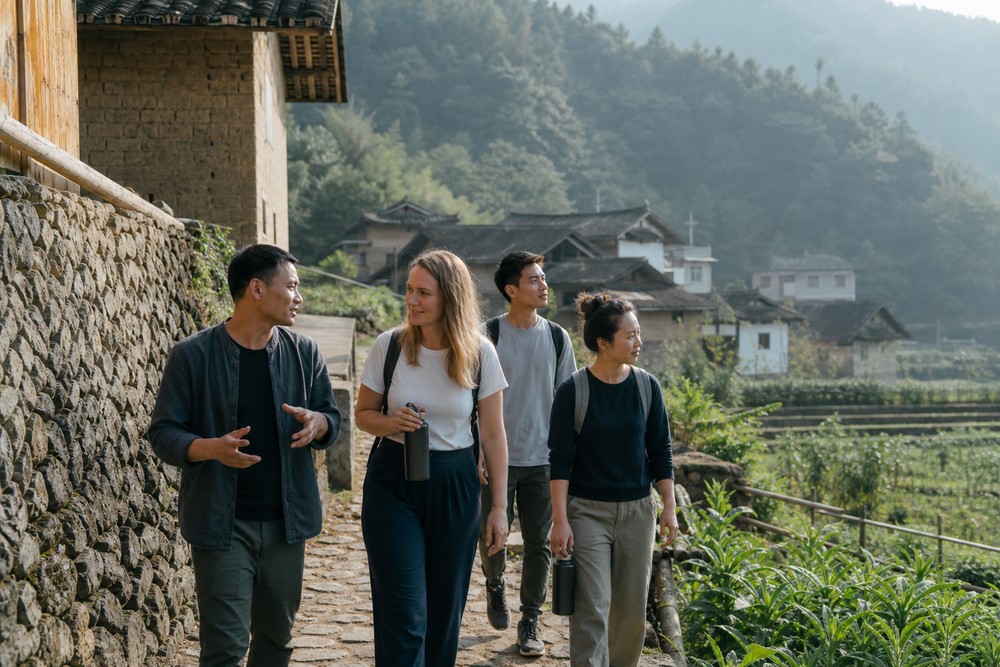
Travel through Fujian more responsibly with practical guidance on local businesses, heritage villages, wildlife, waste, transport, photography, and community respect.
Read ArticlePlan With Eastorya
Tell us your dates, interests and preferred pace. Our Fujian-based team will help you build the right route.
 English English
  Spanish
 Vietnamese
 Indonesian
 Thai
Thai
 Russian
 Korean