Choosing between a private tour and a group tour changes more than the price of a China trip. It affects pace, food choices, the amount of historical context, how easily plans adapt, and how much time is spent waiting for others. Neither format is automatically better. The right choice depends on your priorities, confidence, budget, mobility, and the complexity of the destination. Fujian provides a useful example because cities are easy to reach but Tulou villages and rural areas require more coordination.
When a private tour works best
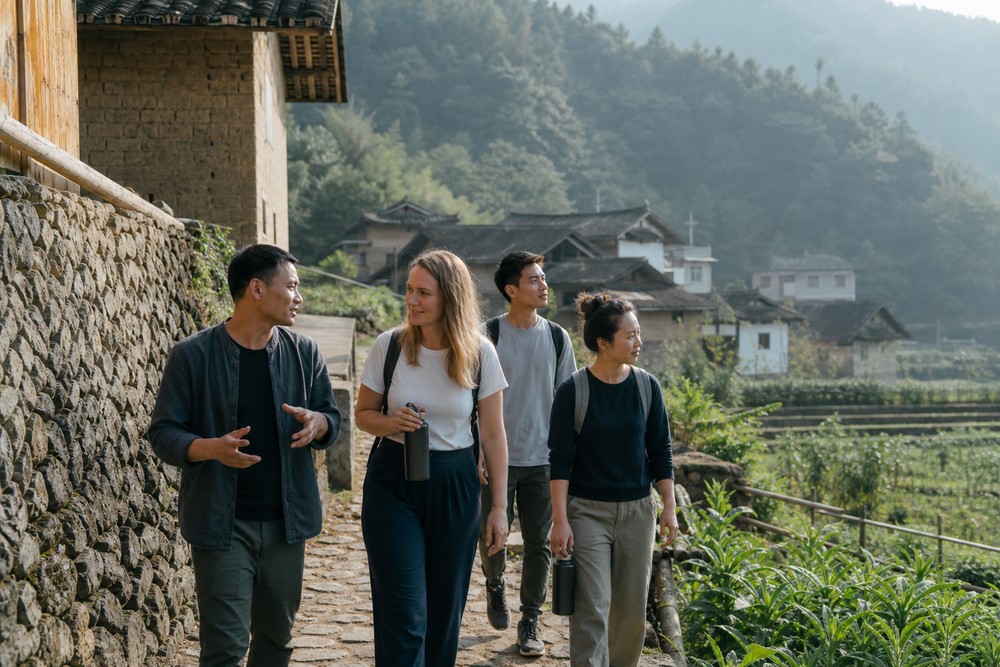
Private travel suits couples, families, friends, photographers, travelers with mobility needs, and anyone with specific interests. The route can start later, slow down, or replace a stop when weather changes. A good private guide adjusts explanations to the group instead of reciting a fixed script. The premium is most valuable on complex rural days, at culturally layered sites, or when time is limited.
Advantages of a small group
Small groups reduce per-person costs and create social energy. They work well for straightforward routes where participants share similar expectations. Transport and admission are organized, which removes planning pressure. Quality depends on group size, guide skill, shopping policies, and schedule design. Read the itinerary carefully and ask how much time is spent collecting passengers or visiting commercial stops.
Compare the real cost
A private quote may include vehicle, guide, route planning, and hotel pickup, while a low group price may exclude meals, optional activities, or transfers. Compare like with like. Consider the value of time as well as money. Losing several hours to pickups or unwanted stops can be expensive on a short holiday. Ask for clear inclusions and cancellation terms before paying.
Questions to ask any operator
Request the legal company name, guide language, vehicle standard, group size, emergency contact, payment terms, and a detailed list of inclusions. Ask whether shopping visits are required and whether the itinerary can change due to weather. Responsible operators do not promise impossible access or guaranteed wildlife, ceremonies, or private community encounters.
A flexible hybrid approach
Many travelers combine independent city days with private excursions. You might explore central Xiamen alone, then hire a guide and vehicle for Tulou country or a heritage-focused day in Quanzhou. This approach controls costs while adding support where it matters. It also creates healthy space between structured interpretation and personal discovery.
Cómo integrar esta experiencia en un itinerario más amplio por China
A strong itinerary gives this subject enough time to feel connected rather than isolated. Start by deciding how when a private tour works best, advantages of a small group, and compare the real cost relate to the places before and after them. Keep arrival and departure days light, especially when a flight, ferry, rural drive, or large railway station is involved. Use one well-located base where possible and group nearby visits on the same day. This reduces repetitive transfers and leaves more energy for conversations, meals, and unplanned discoveries. If your schedule is short, remove a stop rather than shortening every stop. The best travel memories often come from an extra hour in one neighborhood or village, not from reaching the highest possible number of attractions.
Errores habituales de planificación que hay que evitar
The first mistake is relying on an itinerary copied from a stranger whose season, pace, budget, and interests may be completely different. The second is treating travel time shown on a map as the full door-to-door journey. Security checks, station walks, traffic, weather, and ticket collection can add meaningful time. Another mistake is postponing essential preparation until arrival. Complete the practical items in this guide early, including compare total inclusions, not headline price and confirm maximum group size. Finally, avoid making claims or bookings based only on promotional language. Check what is actually included, whether a site remains open, and whether an experience is appropriate for residents as well as visitors. Clear expectations create a calmer trip and make it easier to respond when conditions change.
Por qué el conocimiento local mejora el viaje
La información te dice dónde está un lugar, pero el conocimiento local explica por qué es importante y cómo disfrutarlo al ritmo adecuado. Un buen anfitrión local puede traducir mucho más que palabras. Puede interpretar las normas de etiqueta, dar a conocer la gastronomía regional, indicar la ruta más práctica y explicar cuándo una parada famosa resulta menos interesante que una alternativa más tranquila. Esto resulta especialmente útil para los visitantes internacionales que vienen por primera vez y desean profundizar en la cultura sin perder tiempo en cuestiones logísticas evitables. El apoyo local debe dejar, no obstante, margen para la elección personal. Haz preguntas, comparte tus intereses y sé sincero sobre tus prioridades en cuanto a desplazamientos, comida, comodidad y fotografía. El resultado debería parecer tu propio viaje por China, con el apoyo de personas que conocen el destino, en lugar de un programa preestablecido que se ofrece a todos los viajeros exactamente de la misma manera.
Antes de confirmar tus planes
Revisa la ruta una vez desde la perspectiva de un día normal de viaje. Comprueba a qué hora tienes que levantarte, cuánto tiempo pasarás sentado en un vehículo, dónde se incluyen las comidas y si hay tiempo para ir al baño, descansar o cambiar de planes. Confirma los nombres y direcciones en chino, guarda las reservas sin conexión y comparte el itinerario con alguien de confianza. Vuelve a comprobar la información meteorológica y las condiciones de acceso oficiales poco antes del viaje. Si el plan incluye un guía o un operador, solicita un itinerario por escrito con datos de contacto y una descripción clara de lo que está incluido. Estos pequeños pasos no son muy glamurosos, pero te permiten dedicar todo el tiempo y la atención que deseas al propio destino.
Lista de comprobación práctica
- Compare total inclusions, not headline price
- Confirm maximum group size
- Ask about shopping stops
- Share mobility and dietary needs early
- Use private support for complex rural routes
Planifica con confianza
Una buena planificación del viaje combina una logística fiable con margen para el descubrimiento. Confirma los horarios de apertura, el transporte, la meteorología y la normativa vigente a través de fuentes fidedignas poco antes de cada día de viaje. Evita elaborar un itinerario que dependa de que todas las conexiones salgan a la perfección. Un especialista local con conocimientos puede resultar útil cuando el idioma, el transporte rural, la interpretación del patrimonio o las necesidades alimentarias son importantes. El objetivo no es eliminar todas las sorpresas, sino asegurarse de que las sorpresas sean agradables en lugar de estresantes.
Preguntas frecuentes
Are private tours in China worth the cost?
They can be excellent value for families, special interests, limited time, or destinations with complicated transport.
What is considered a small group?
Definitions vary. Ask for the guaranteed maximum rather than relying on the phrase small group.
Un siguiente paso bien meditado
Utiliza esta guía como punto de partida y, a continuación, adáptala a tu ritmo, tus intereses, la época del año y tu nivel de comodidad. China recompensa a los viajeros que se preparan con esmero y mantienen la curiosidad una vez allí. Eastorya Travel se centra en experiencias locales auténticas en Xiamen y Fujian, ofreciendo apoyo práctico y espacio para un auténtico descubrimiento cultural. Si necesitas ayuda para diseñar un itinerario personalizado, ponte en contacto con nuestro equipo local indicando tus fechas preferidas y tus prioridades de viaje.
 Ir al contenido



 English
  Spanish
  Vietnamese
  Indonesian
  Thai
Thai  Russian
  Korean