Sustainable travel in Fujian is not only about reducing plastic or choosing a train. It also means respecting living heritage, spending money in ways that benefit local communities, avoiding intrusive photography, and giving places enough time to be understood. Fujian’s coastal cities, Tulou villages, tea landscapes, temples, and rural communities face different pressures. Responsible choices begin with curiosity and continue through the details of each day.
Stay longer and travel more slowly
A slower route reduces repeated transfers and creates more local value. Instead of collecting distant landmarks, spend several nights in one base and explore nearby places. Walk neighborhoods at different times, return to a restaurant, and use local guides for deeper context. This approach often produces a richer trip while reducing transport fatigue and emissions.
Support credible local businesses
Choose licensed local guides, independently operated restaurants, responsible accommodations, and crafts with clear origins. Ask how an experience benefits the people presented in it. Avoid activities that stage private ceremonies, exploit children, or promise access that residents may not have freely agreed to provide. Fair prices support skill and safety; aggressive bargaining can undermine both.
Respect living heritage
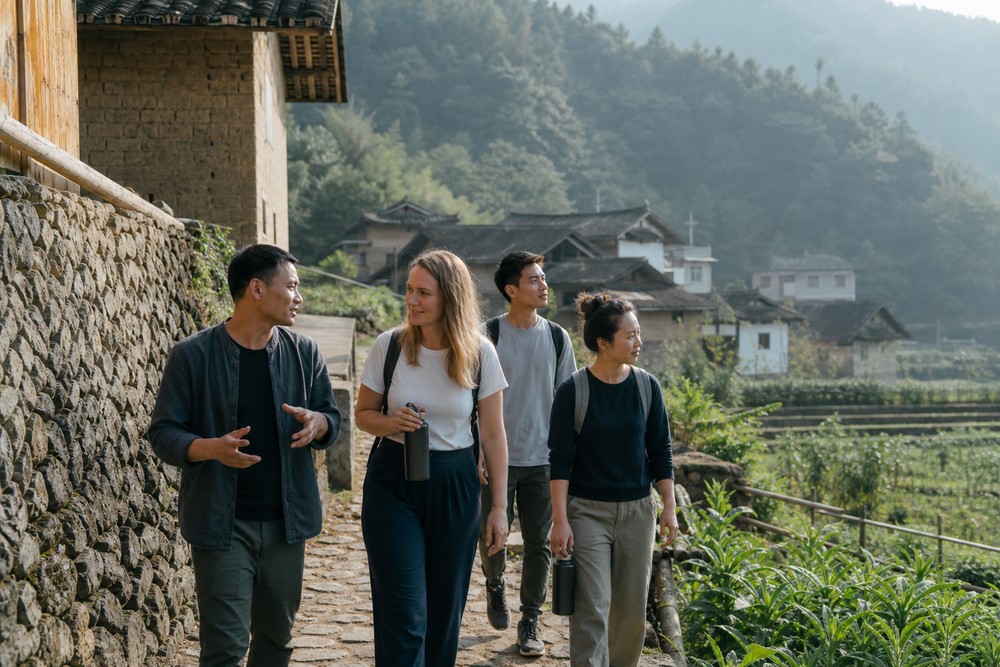
Tulou, temples, historic lanes, and traditional homes may remain active community spaces. Follow boundaries, keep noise low, and ask before photographing people or interiors. Do not enter residential areas simply because another visitor did. Heritage survives through maintenance and daily use, not only through visual preservation. A respectful visitor accepts that some doors remain closed.
Reduce waste and environmental pressure
Carry a refillable bottle where safe refill points are available, refuse unnecessary packaging, and keep waste until a proper bin appears. Stay on established paths in mountain and coastal areas. Do not collect plants, shells, stones, or architectural fragments. Wildlife encounters should never involve feeding, touching, or crowding animals for photographs.
Share stories accurately
After the trip, describe places with care. Avoid presenting communities as timeless, isolated, or exotic. Verify historical claims, credit local knowledge, and distinguish personal impressions from fact. Geotagging sensitive or private locations can create pressure, so consider whether sharing an exact point is necessary. Responsible storytelling is part of responsible travel.
Làm thế nào để lồng ghép trải nghiệm này vào hành trình khám phá Trung Quốc rộng lớn hơn
A strong itinerary gives this subject enough time to feel connected rather than isolated. Start by deciding how stay longer and travel more slowly, support credible local businesses, and respect living heritage relate to the places before and after them. Keep arrival and departure days light, especially when a flight, ferry, rural drive, or large railway station is involved. Use one well-located base where possible and group nearby visits on the same day. This reduces repetitive transfers and leaves more energy for conversations, meals, and unplanned discoveries. If your schedule is short, remove a stop rather than shortening every stop. The best travel memories often come from an extra hour in one neighborhood or village, not from reaching the highest possible number of attractions.
Những sai lầm thường gặp trong quá trình lập kế hoạch cần tránh
The first mistake is relying on an itinerary copied from a stranger whose season, pace, budget, and interests may be completely different. The second is treating travel time shown on a map as the full door-to-door journey. Security checks, station walks, traffic, weather, and ticket collection can add meaningful time. Another mistake is postponing essential preparation until arrival. Complete the practical items in this guide early, including use fewer bases and stay longer and hire licensed local guides. Finally, avoid making claims or bookings based only on promotional language. Check what is actually included, whether a site remains open, and whether an experience is appropriate for residents as well as visitors. Clear expectations create a calmer trip and make it easier to respond when conditions change.
Tại sao kiến thức địa phương lại giúp chuyến đi trở nên thú vị hơn
Thông tin cho bạn biết một địa điểm nằm ở đâu, nhưng kiến thức địa phương mới giải thích tại sao nơi đó lại quan trọng và cách trải nghiệm nó với nhịp độ phù hợp. Một người hướng dẫn địa phương giỏi có thể truyền đạt nhiều hơn chỉ là lời nói. Họ có thể giải thích các quy tắc ứng xử, giới thiệu ẩm thực địa phương, chỉ ra lộ trình thuận tiện nhất và giải thích khi nào một điểm tham quan nổi tiếng lại không thú vị bằng một lựa chọn yên tĩnh hơn. Điều này đặc biệt hữu ích cho du khách quốc tế lần đầu đến Trung Quốc, những người muốn khám phá chiều sâu văn hóa mà không phải mất thời gian vào những vấn đề hậu cần không cần thiết. Sự hỗ trợ từ người địa phương vẫn nên để lại không gian cho sự lựa chọn cá nhân. Hãy đặt câu hỏi, chia sẻ sở thích của bạn và thành thật về các ưu tiên liên quan đến di chuyển, ẩm thực, sự thoải mái và chụp ảnh. Kết quả sẽ mang lại cảm giác như một hành trình của riêng bạn qua Trung Quốc, được hỗ trợ bởi những người hiểu rõ điểm đến, thay vì một chương trình cố định được trình diễn cho mọi du khách theo cùng một cách.
Trước khi bạn xác nhận kế hoạch của mình
Hãy xem lại lộ trình một lần từ góc độ của một ngày du lịch bình thường. Kiểm tra xem bạn phải dậy sớm bao nhiêu, sẽ ngồi trên xe bao lâu, thời gian ăn uống được sắp xếp như thế nào, và liệu có thời gian để đi vệ sinh, nghỉ ngơi hay thay đổi kế hoạch hay không. Xác nhận tên và địa chỉ bằng tiếng Trung, lưu các đặt chỗ ở chế độ ngoại tuyến và chia sẻ lịch trình với người mà bạn tin tưởng. Kiểm tra lại thời tiết và thông tin chính thức về việc đi lại ngay trước khi khởi hành. Nếu kế hoạch có bao gồm hướng dẫn viên hoặc nhà điều hành, hãy yêu cầu một lịch trình bằng văn bản kèm theo thông tin liên lạc và các dịch vụ được bao gồm rõ ràng. Những bước nhỏ này tuy không hấp dẫn, nhưng sẽ giúp bạn tiết kiệm thời gian và sự tập trung để dành trọn vẹn cho điểm đến.
Danh sách kiểm tra thực tế
- Use fewer bases and stay longer
- Hire licensed local guides
- Ask before photographing people
- Buy crafts with clear local origins
- Avoid wildlife feeding and intrusive geotagging
Lập kế hoạch một cách tự tin
Một kế hoạch du lịch tốt là sự cân bằng giữa việc chuẩn bị hậu cần đáng tin cậy và không gian cho những khám phá bất ngờ. Hãy xác nhận giờ mở cửa, phương tiện di chuyển, thời tiết và các quy định hiện hành thông qua các nguồn tin đáng tin cậy ngay trước mỗi ngày khởi hành. Tránh lập lịch trình phụ thuộc vào việc mọi điểm nối chuyến đều diễn ra hoàn hảo. Một chuyên gia địa phương am hiểu có thể rất hữu ích khi ngôn ngữ, phương tiện giao thông ở vùng nông thôn, việc giải thích di sản văn hóa hoặc nhu cầu ẩm thực là những yếu tố quan trọng. Mục tiêu không phải là loại bỏ mọi điều bất ngờ, mà là đảm bảo những điều bất ngờ đó mang lại niềm vui thay vì gây căng thẳng.
Các câu hỏi thường gặp
Is train travel a sustainable option in Fujian?
High-speed rail is efficient for city-to-city travel. Rural areas may still require road transport, which can be shared and planned geographically.
How can visitors support Tulou communities?
Use local guides and services, buy appropriate local products, respect private areas, and avoid treating residents as photo subjects.
Một bước đi tiếp theo đầy cân nhắc
Hãy lấy hướng dẫn này làm điểm khởi đầu, sau đó điều chỉnh cho phù hợp với nhịp độ, sở thích, mùa du lịch và mức độ thoải mái của bạn. Trung Quốc luôn mang đến những trải nghiệm tuyệt vời cho những du khách chuẩn bị kỹ lưỡng và luôn giữ tinh thần tò mò khi đặt chân đến đây. Eastorya Travel tập trung vào những trải nghiệm địa phương chân thực tại Hạ Môn và Phúc Kiến, kèm theo sự hỗ trợ thiết thực và không gian để khám phá văn hóa một cách chân thực. Nếu bạn cần hỗ trợ để thiết kế một lịch trình riêng, hãy liên hệ với đội ngũ địa phương của chúng tôi và cung cấp ngày đi dự kiến cùng các ưu tiên du lịch của bạn.
 Chuyển thẳng đến nội dung


 English
  Spanish
  Vietnamese
  Indonesian
  Thai
Thai  Russian
  Korean